Showing posts with label history. Show all posts

Saturday, 20 May 2017

What Judges Want: a reply - if the court pleases.

You can bet your life on it. At every legal conference there will be a Judge’s presentation of a particular kind. Sometimes the titles mislead. Affective Advocacy sounds innocuous enough, a nice little post-lunch soporific easing one towards the evening’s networking opportunities. Other titles, The View from the Bench, at least hint at their purpose.
Sometimes it can be slow and painful.
Still others are like a merciful kill shot between the eyes of a wounded beast: What Judges Want is unequivocal.
         Whatever the title don’t be fooled, the presentation is not so much an opportunity for the bench to guide and nurture, as it is a chance to warn, threaten and even punish.

Friday, 2 December 2016

The Nude Selfie Movement: from toss shot to selfie stick and beyond.


Thirty-two years ago I tossed a camera into the air, smiled at the sky then heard the device smash to smithereens at my feet. An inauspicious beginning for the photographic technique that delights the world today. Of course, I didn’t give up at one smashed camera, or two or three. I kept trying till I perfected the toss-shot then went on to invent the selfie proper: it turns out that any inanimate object or slow moving animal can be used to create selfies. Your camera, rested on a rock, wedged in a tree branch or taped to a koala, will give you a basic selfie. This technique was a triumph of invention. Then came the stick.
Choose a stick of appropriate weight and length.


Sunday, 27 November 2016

The World's First Selfie: how I invented the toss-shot and what came next.

A typical early 'toss shot'.
It is 32 years since I invented the selfie. Little did I know how the technique would sweep the globe. How today, everyone has held out an arm to snap a shot of themselves, sometimes even wearing clothes. How with a click of the finger it’s possible to record yourself with friends, politicians, sportsman, actors, animals and food. How the crude selfie-stick I made decades ago has developed into the slickest, most high tech lengths of composite in the world. How the world’s first go-pro that I fashioned with VHS and string has become small, robust and waterproof.

Thirty-two years. If it were a marriage it would be the diamond anniversary plus two. So it seems fitting to record how it all began. In this piece I'll reveal the story of the selfie's creation. Next week I'll write about how far the selfie has come and how a remote village in South America is challenging the world to return to the selfie's simple beginnings.


Friday, 26 August 2016

Long Tan Remembered. 'Thank the Jesus it's over there ...'

The battle of Long Tan was remembered last week. The battle, fifty years ago last Thursday 18 August, saw a little over 100 Australian infantrymen fight a North Vietnamese force at least ten times that size. With the aid of artillery support and helicopter resupply the Australians survived the enemy's onslaught and inflicted hundreds of casualties. It was a kind of victory.
'It'd scare the fuck out of yer flying ducks,' said Harry.

Tuesday, 23 August 2016

The Savage. Part 8 of 8.

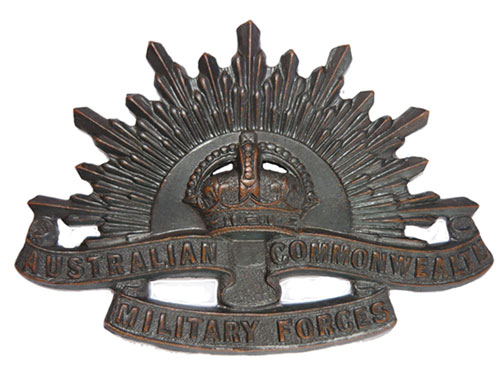
The day Bob died Merle opened the suitcase for what she told herself would be the last time. With her husband still beside her she set the cash tin on the sheet. Insider were her husband’s insignia, rising sun hat badge, wage book, tobacco tin, a dozen monochrome photographs and the letters bound together with string.
She looked through the photographs. There was one she liked. Bob and a half dozen other soldiers and nurses on a tropical beach somewhere. They were toasting the end of the war. Bob held his beer bottle high, a cigarette dangling from his mouth. She smiled and put the photograph with the others.

Saturday, 20 August 2016

The Savage. Part 7 of 8.

Bob’s confusion did not return until his seventy-fifth year. But when it did it stayed with him and Merle for the rest of their days together.

Initially Bob’s mix-ups and muddles went un-named. The children were the first to label their father’s condition. They called it ‘SOBS’ or ‘Silly Old Bugger Syndrome’. They called it this even after the medical profession had adjudged the symptoms and passed sentence. ‘Alzimers’.

Wednesday, 17 August 2016

The Savage. Part 6 of 8.

The war began on his seventieth birthday. The children and their families had gathered along with friends. Bob had celebrated by drinking more than he was used to. He downed ten or more stubbies in the course of the day and night. It was late when he joined Merle in bed but he didn’t stay. Sometime in the early hours of the morning he left the bed and the room. Merle started but drifted back to sleep only to be woken again when the first mango crashed into the tin. But this was not mangoes falling onto the tin roof as sometimes happened. These crashing sounds were coming from down the slope, down at the Bradshaw’s chicken run.

Sunday, 14 August 2016

The Savage. Part 5 of 8.

Merle’s daughter was born in January, her sister-in-law stayed until March. During that time the young mango tree remained in its juice tin on the corner of the veranda. By then the tin was rusting and its label sun-faded and torn.  On the day Merle’s sister-in-law left the two women conspired to plant the mango.

Wednesday, 10 August 2016

The Savage. Part 4 of 8.

By and large Bob had kept the greenery in check. Even now, some sixty-five years later the evidence was all about Merle: the dusty slope below the veranda, the sparse shrubs down the sides and the heavily pruned frangipanis at the front. But she had succeeded in one thing. She had planted and saved the mango tree. Now it dominated one side of the back yard, its roots lifting and toppling the old stone BBQ.

Merle kicked one of the mangoes at her feet. It rolled across the wonky boards, under the railing and dropped. It landed with a thud in the dirt and rolled down to the dilapidated chicken run. The slope was bordered by spindly grevillea and bottlebrush. None of them were big. Bob never allowed them to grow as nature intended. It was only with his physical and mental decline that they had been allowed to shoot above a metre high. But then came the long drought so they remained thin and grey and the Buffalo grass crackled under foot.

The old Bradshaw place was a contrast. It was green down there were the neighbour’s plants had their roots in the spring water that had only recently dried up. The Bradshaw’s had long since moved but the cottage remained, as did the overgrown old chicken run. Bananas and Pawpaws grew rank in the chicken shit and pumpkin and passionfruit vines scrambled over the wire and tin. Some of the mangoes her husband had rolled down the slope had germinated there and a couple of mango saplings struggled above the vines.
It was 65 years old, its trunk the size of a beer barrel.
Merle smiled at the sight. Yes. She was glad she had fought to keep the mango tree. Now it was the only plant of any size in their garden. It was 65 years old, its trunk the size of a beer barrel; and not one of those dinky metal kegs, but a good old wooden barrel. Bob had been dead against the tree and Merle had fought for it. She remembered.

Bob’s sister had brought the plant with her from Bowen in 1950. Merle was pregnant with her first born and her sister-in-law had come to help out and to welcome her new little relative. She had brought the plant as a gift. She had planted the seed in a big Golden Circle pineapple juice tin. It was two months old when she left for Brisbane. Then she nursed the plant between her feet and watered it during the monstrous, stop-start two day train journey south. Bob and Merle met her at the station. It was summer. No kaki this time. Just screaming sweaty school kids and the smell of mangoes and pineapples in the freight wagons.

Bob thanked his sister for the plant but he neglected to put it in the ground. When Merle asked him about it he warned her about the affect it would have. He told her how big and messy it would become; how what was fine in a vast north Queensland yard would never do on a city block. But Merle knew now that Bob didn’t tell her the truth: he didn’t tell her about his fire lines and the closed in feeling.


To be continued: Next time, Merle defeats her husband as he tries to murder the tree she had planted and loved.
Saturday, 6 August 2016

The Savage. Part 3 of 8.

Bob returned to Merle briefly in 1944. They enjoyed a frenzied fortnight together before he travelled north again; this time to Far North Queensland to teach jungle warfare to the latest recruits. He only returned for good when Japan was destroyed and the war was over.

Merle met his troop train at Roma Street Station. She recalled the steam and coal smoke and the crush of kaki. Slouch hats were everywhere. Bob jumped from the still moving train, dropped his duffle bag and embraced her. He kissed her and said something she could not hear over the shouts of woman and children and the screeching whistle of the steam engine.

Wednesday, 3 August 2016

The Savage. Part 2 of 8.

With her husband dead inside the house, Merle remembers how they met and wonders why things went so terribly wrong ...

‘Bugger the papers.’ Merle shook her head at the yellowing pages under the front stairs.
'And bugger that paper boy, man, whoever.' She returned inside, made tea and toast and went to the back veranda. The L-shaped space ran the length of two sides of the Queenslander. Merle sat at an old cane setting and sipped her tea. A few mangoes were on the table and a dozen more were scattered about the smooth-worn floorboards. Most of the mangoes were green; some were scratched and chewed by flying fox and possum.
‘Bob's hand grenades’ she said absently.

Sunday, 31 July 2016

The Savage: Part 1 of 8.

Kokoda. Australians know the place. That outpost in the northern wilderness of New Guinea. And they know the track. Just a shoulder's width, winding 96 kilometres south through the mountains and valleys and jungle - from Kokoda to Ower's Corner, just a spit from Port Morseby.

It was here, from July to October 1942 that Australian soldiers killed and died for their country. Outnumbered ten to one their fighting retreat exhausted the Japanese attackers. When finally reinforced they drove back destroying their enemy on New Guinea's northern coast.

The brutality of this campaign, the savagery or it, was unparalleled.

This short story, this imagined life contemplates that campaign and the terrible toll exacted upon the men who where there, and the women and children who came after.

The Savage will be published in eight parts over four weeks (Sundays and Wednesdays). Here begins The Savage.